


















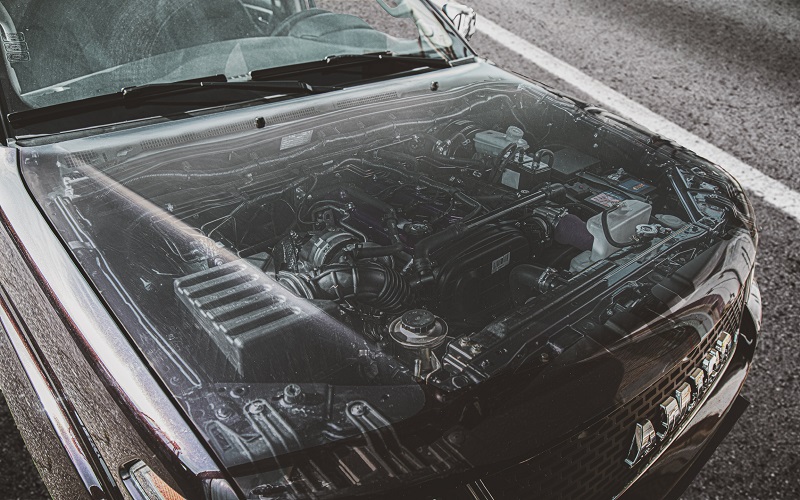
 Battery, an Integral Part of Vehicles
Abstract:
The battery is a fundamental part of any vehicle with any fuel. However, According to its technical specifications, including nominal voltage, capacity, power, and intensity of cold start current, each battery can only be suitable for a specific type of vehicle. For this reason, every car manufacturer should choose a right battery according to the starting power and the amount of electricity required by the car.
Car drivers should also have basic information about the car's electrical system and the main characteristics of the battery suitable for their car. Car drivers should also have basic information about the car's electrical system and the main characteristics of the battery suitable for their vehicle.
Introduction
The battery is an element that plays a main role in starting the movement in any car. The suitability of the battery capacity and power with the car's electrical system will cause the vehicle to start well. When the battery capacity is low, it takes longer to start the car. Sometimes this action must be repeated several times to start the engine. Long-term and continuous starting causes overheating of the starter and is likely to lead to starter failure.
On the other hand, if the battery capacity is more than the necessity of the car, the car's starting life system will decrease. If the battery's internal resistance is reasonable by increasing the capacity, the generated intensity rises too.
Some drivers think that installing a high-capacity battery in the car will improve the car's starting condition.
This idea comes from this: in such a situation, starting the car is often shorter, and the car engine starts working faster, but these types of starters reduce the life of the starter system and car lights.
In search of the best battery: choose according to the rules
Regular car electrical systems have a voltage, which is usually a constant multiple of 12 volts, so almost all car batteries in the market have the same voltage. Cargo and heavy vehicles have nominal voltages higher than 12, but their voltages are such that they are an integer multiple of 12.
Over the 21st century, new and innovative designs of cars have been discussed, and extensive research has been conducted in this field.
The system includes 36V and 42V hybrid batteries and changes to the electrical system.
The research articles published on the batteries of these cars show that this electrical system has much better efficiency than the usual systems. In hybrid batteries, the battery system includes a standard battery with a voltage of 36 or 42 volts and a supercapacitor, which is used as a car battery. In this system, a supercapacitor increases the battery's efficiency and life and its capability to generate current.
Nominal battery capacity
Battery capacity is an essential and fundamental parameter in choosing a battery. The first step in selecting a battery is to familiarize yourself with the basic information of the car's electrical system, which car manufacturers often provide in the form of a booklet with the vehicle. The car's electrical system's technical information includes the required battery capacity. When choosing a battery, the capacity of the battery should be at the desired level. When a battery performs a good start in less than two seconds, it means it has the proper performance and capacity.
Cold start current intensity
This parameter is a technical characteristic of the battery, which is a perfect criterion for choosing a battery, especially for the cold seasons of the year.
When a battery's nominal capacity is higher, the battery is more likely to start at low temperatures. One of the problems of most batteries is their weakness in cold weather. Every driver feels this problem well on a cold winter morning. During hot weather, the battery is not weak, but when the ambient temperature drops, the battery becomes vulnerable.
This parameter is defined in the Iranian national standard instruction No. 71 for lead-acid car batteries. The maximum current that a 12-volt battery can produce at a temperature of -18 degrees Celsius in 10 seconds, with the condition that its voltage should not be less than 7.5 volts during this period. The intensity of the cold start current of each battery depends on two factors: the nominal capacity and the battery's internal resistance. The battery capacity increases the amount of cold start current—the higher the internal resistance of the battery, the lower the value. The high internal resistance of the battery is a primary defect of the battery, which is related to the production and manufacturing process.
Each battery must produce energy at a temperature of -18 degrees centigrade, at least three times its nominal capacity. For example, a 60 A.h battery must provide the minimum cold start current intensity of A180.
Sealing batteries
In terms of waterproofing, car batteries have two general types. The usual type of batteries, which are known as perforated batteries, have valves on the battery lid to increase the electrolyte and a side hole for excess acid to escape. If the porous battery does not have a side valve, there should be holes in the lids of the acid-increasing valves so that the excess gases inside the battery can escape.
In this type of battery, sulfuric acid should be filled to 128 grams per cubic meter (1.28 GR/CM3), and the battery should be kept dry and acid-free before use. After pouring the battery electrolyte, the battery should be given time for about an hour so that it can penetrate the active materials of the anode, cathode, and into its separators (Separator). After this time, the battery can be installed on the car.
The second type of car battery is (Free MF Sealed Maintenance and sometimes incorrectly called dry batteries. Unlike dry batteries, these batteries are only sealed in the body and lid. The acid needed by the manufacturer is added during manufacture, so a consumer does not need to add acid to them. In these batteries, there is no need to take care of and add acid during use.
More attention should be paid to selecting porous batteries because the phenomenon of Spillage and leakage of acid electrolytes is more observed in them.
These batteries should not suffer electrolyte leakage when tilted at a speed of 55 degrees from the vertical position. This work can be done simply after adding acid to this type of battery, and after making sure that there is no leakage, they can be installed on the car.
The battery's external dimensions
Battery placement depends on the car's electric capacity during construction. As a result, the battery's external dimensions must also be proportional to its location within the car. The issue is more important in modern vehicles because the battery seat is limited, there is no extra space, and the battery cannot have larger dimensions.
Battery terminals
Each car battery has two output terminals, + and -, through which the battery is connected to the car's electrical system. At first glance, these terminals, which are made of lead alloy, should have a suitable shape, and their surface should be completely smooth and flat and not have any holes or unevenness. Additionally, you should pay attention to the color of the terminals when buying sealed batteries. In these types of batteries, due to the presence of sulfuric acid electrolyte during storage, if the alloy formulation of these terminals and the way they are placed on the battery lid are not correct, white lead sulfate will appear on them, so-called terminals sulfated. Using these sulfated batteries or terminals causes severe corrosion in the car's connecting wires (battery head), which may go beyond the battery.
The problem of sulphation of the terminals is not observed in ordinary porous batteries when buying because these batteries do not have electrolytes during the storage period. In the absence of electrolytes, sulfation does not happen, and the phenomenon of sulfation of these batteries can only be observed during use.
Battery Body
In addition to the proper dimensions, the battery body must have a suitable shape and position for the car's installation.